
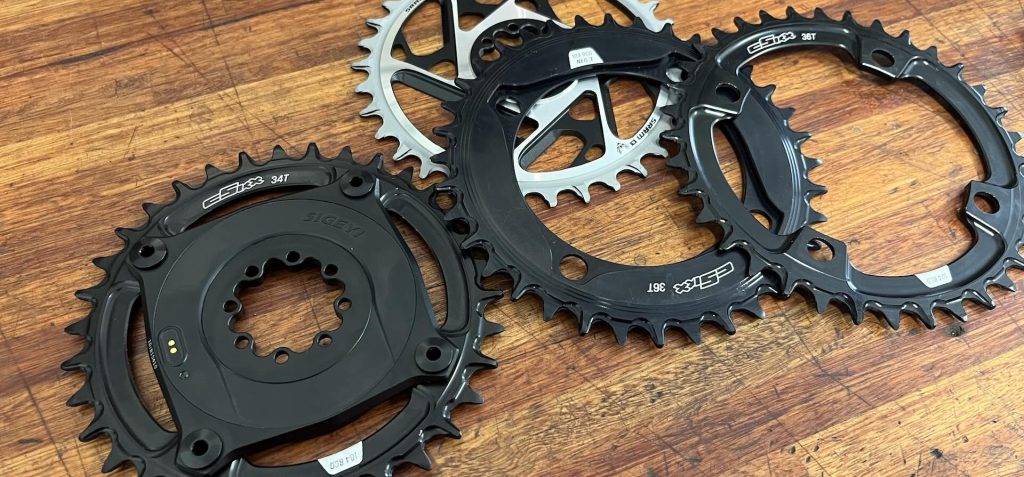
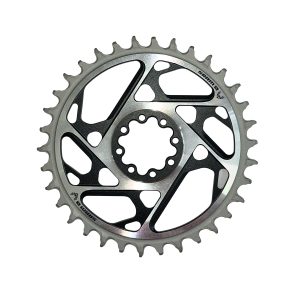
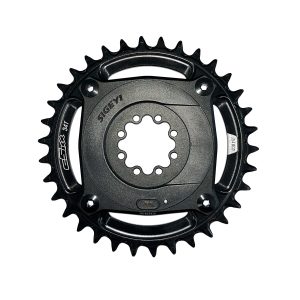
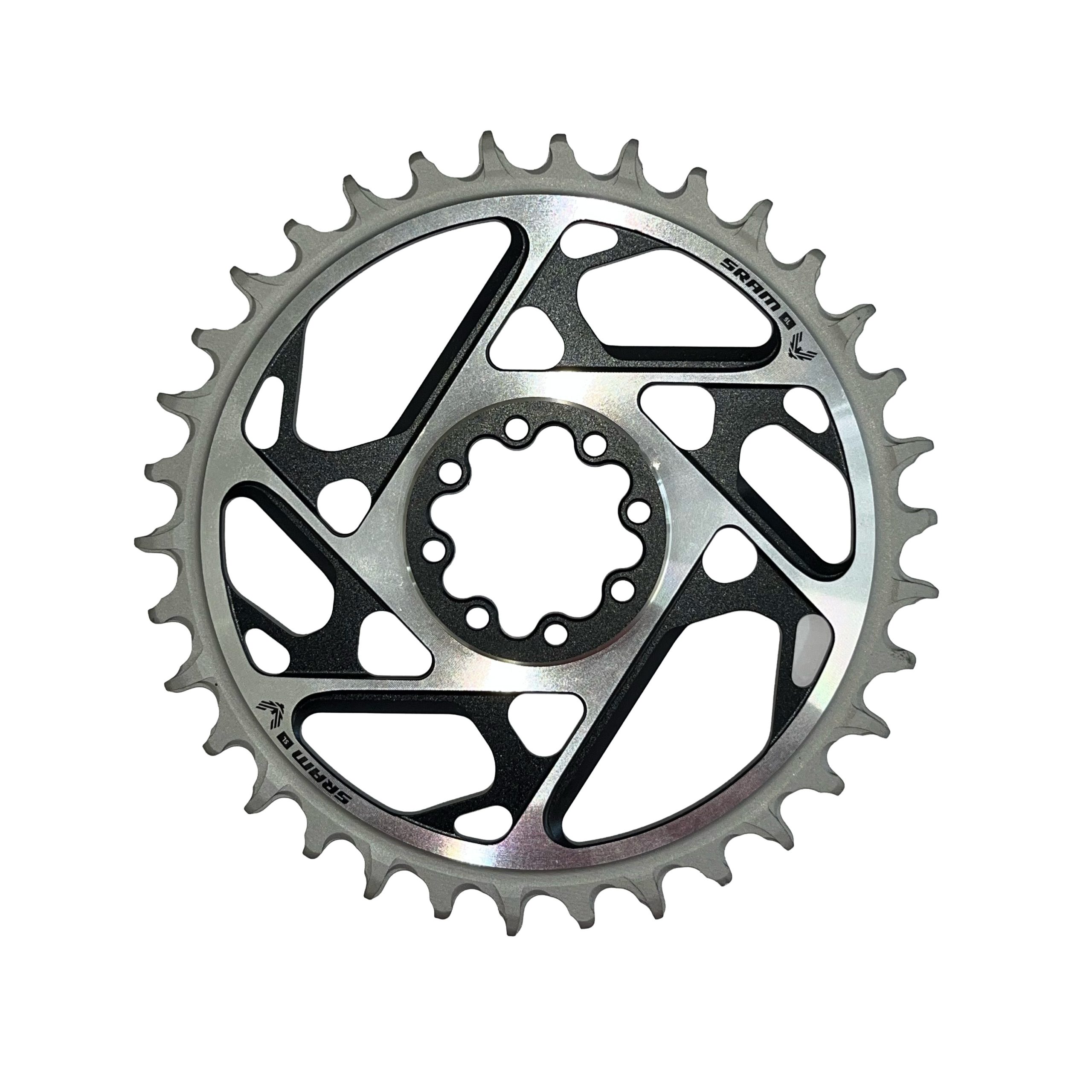
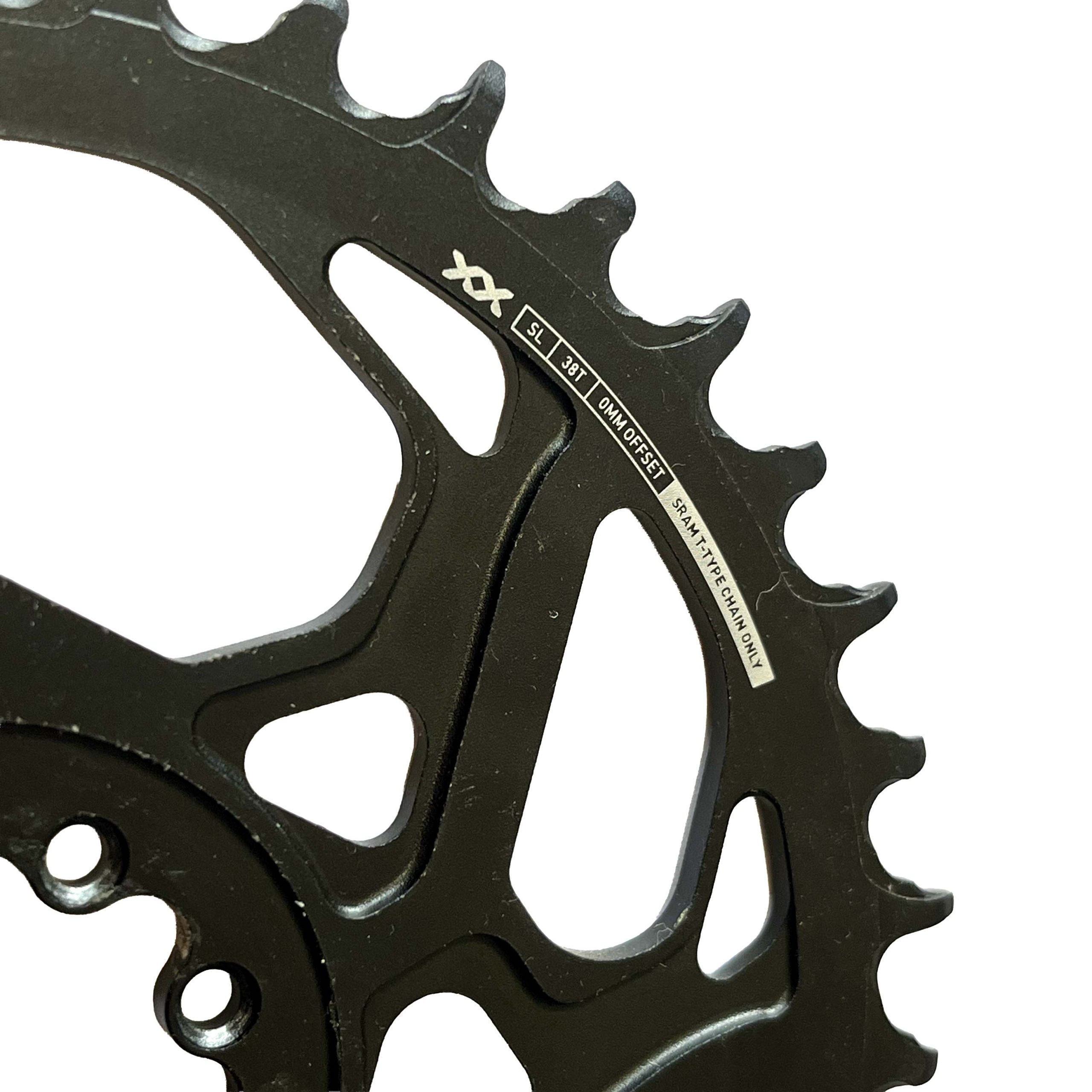
When you install a crank-based power meter, you will also need a new chainring. The chainring you removed from your crank was designed to fit directly to the crank interface, also known as a Direct Mount chainring. Since we have now mounted the power meter to that interface, we need a different type of chainring to mount to the power meter.
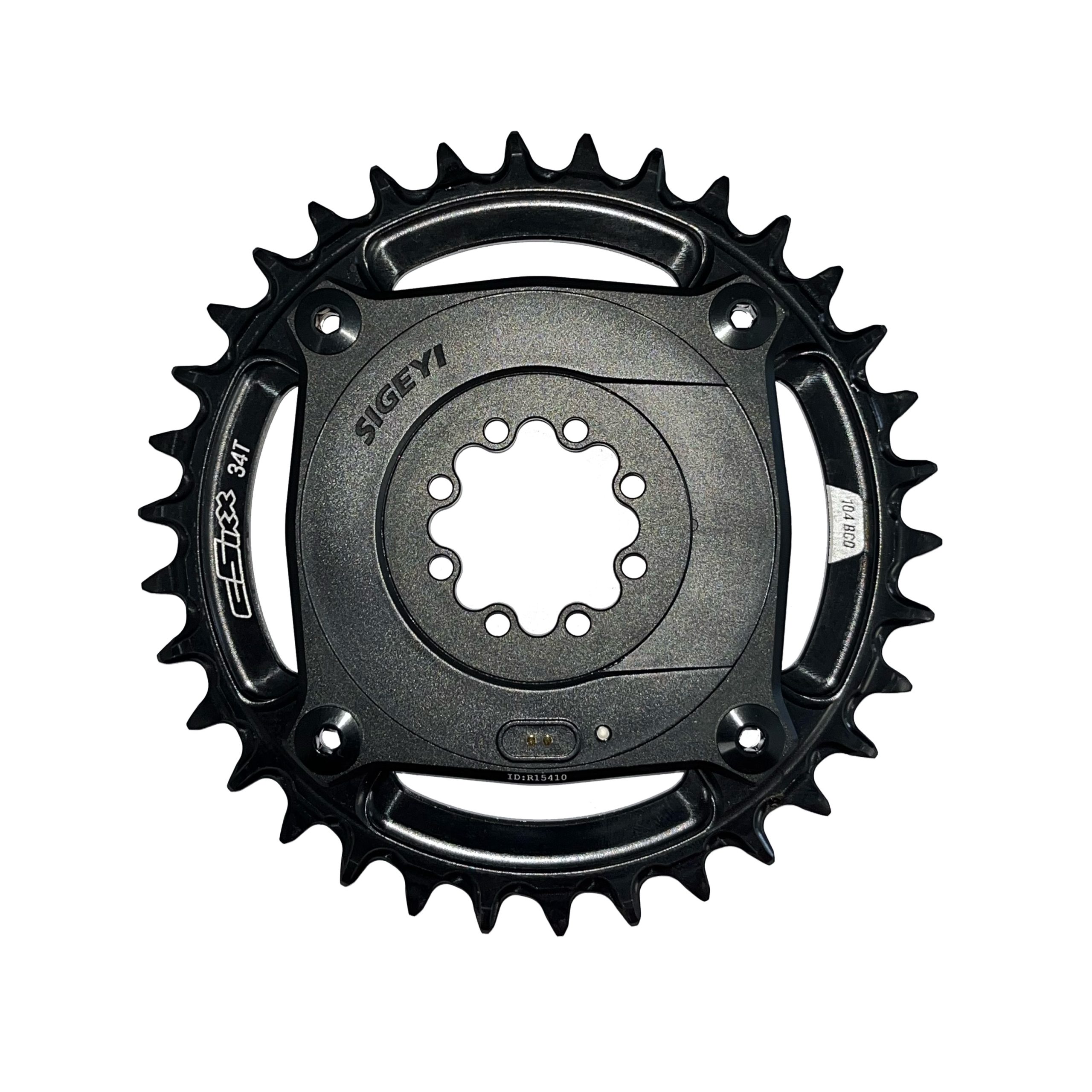
What is BCD?
Bolt Circle Diameter (BCD) or Pitch Circle Diameter is the measurement we use to describe the bolt pattern of a chainring. It is defined as the diameter of the circle which intersects all bolt holes. On a 4-bolt pattern this can be measured easily as the distance between 2 opposing holes.
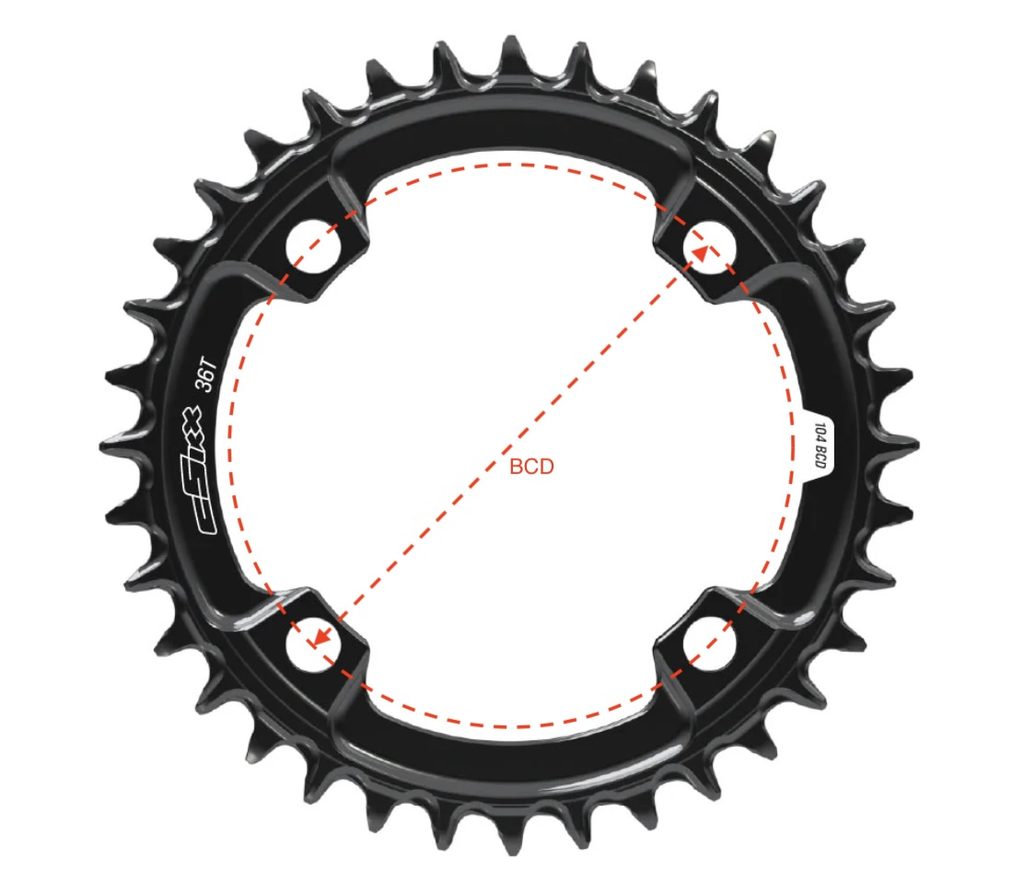
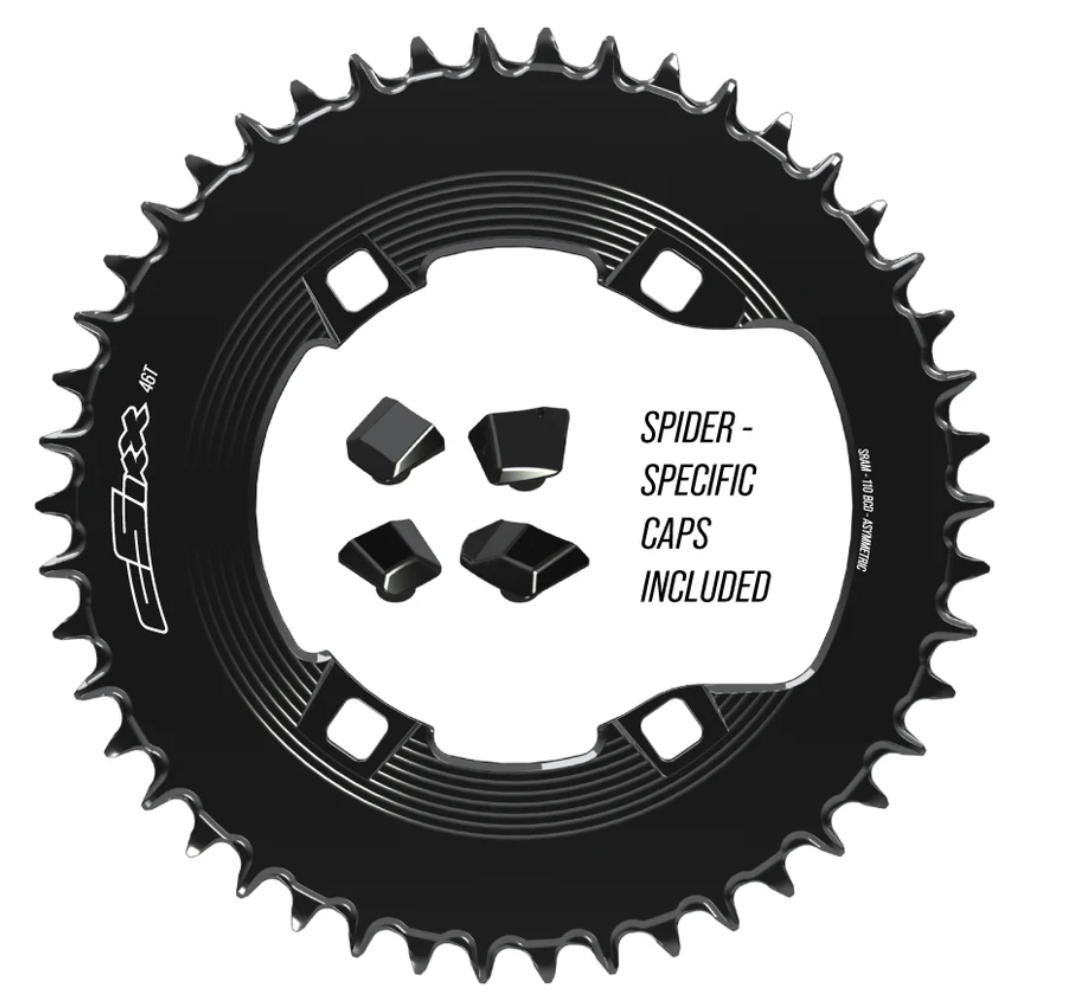
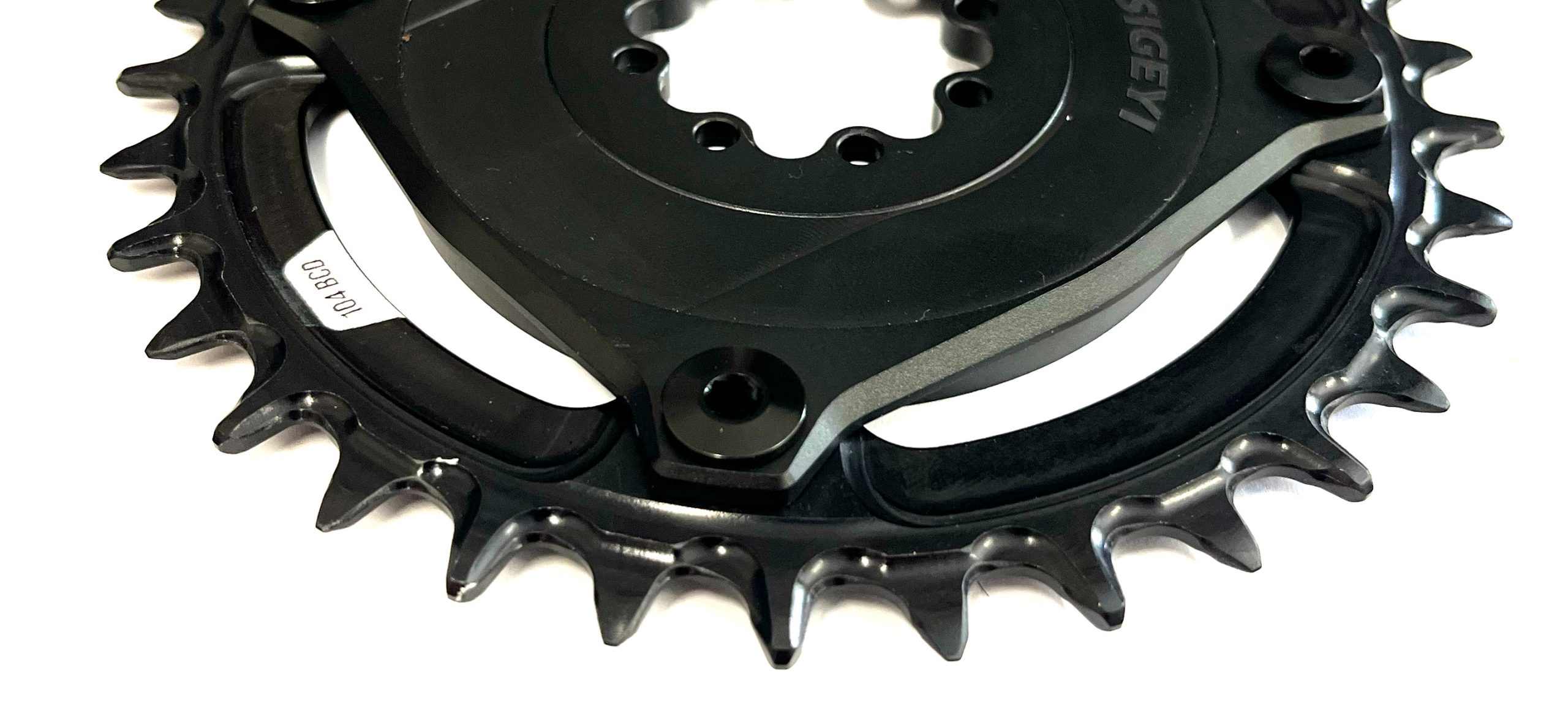
The current range of Sigeyi AXO SL power meters use one of 2 bolt patterns: 104 bcd or 110 bcd (asymmetric)
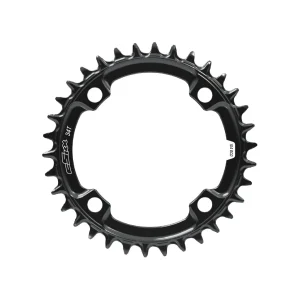
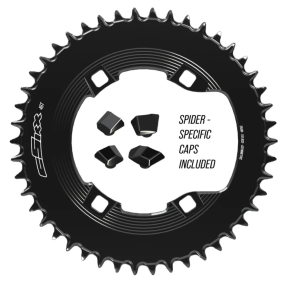
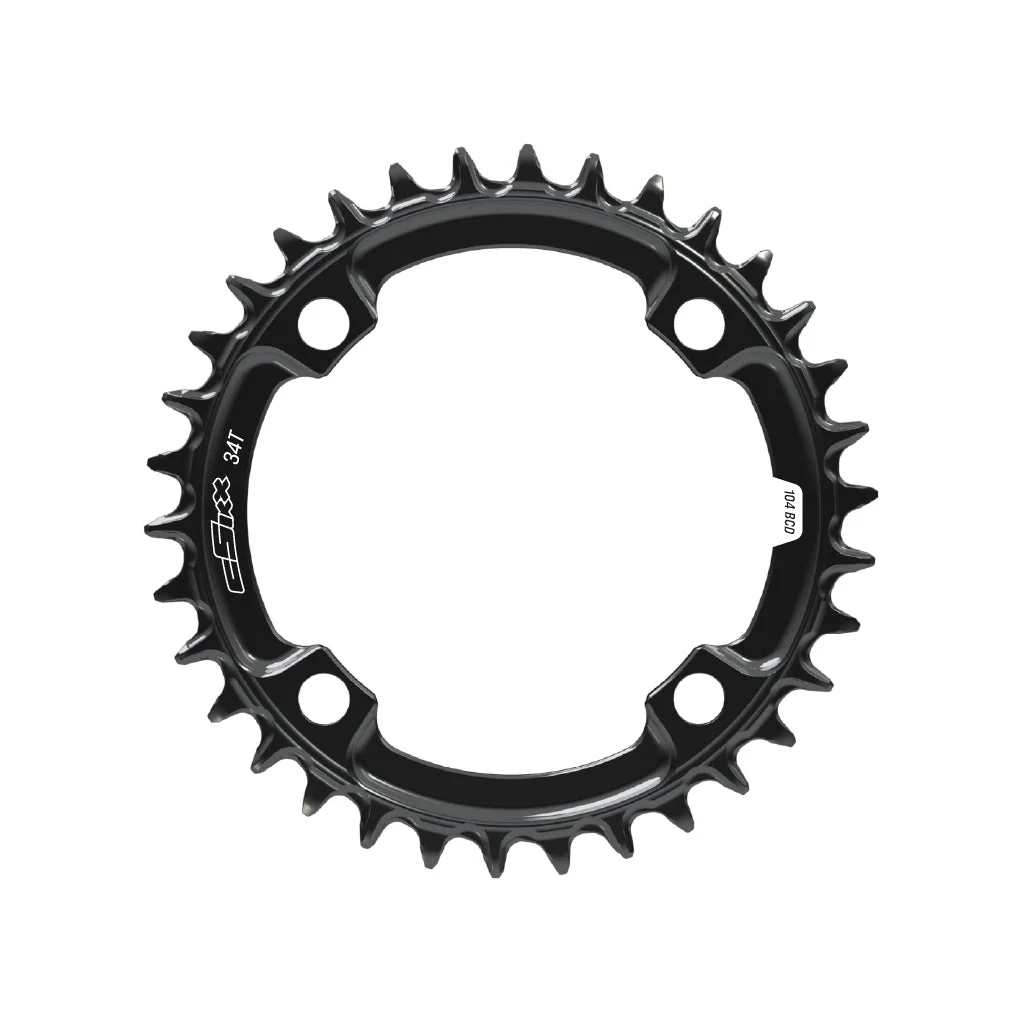
- The 104 BCD chainring is commonly available and used on a variety of different power meters and spiders. It accommodates chainring sizes of 32t to 42t
- There are 2 different 110 BCD Asymmetric patterns. Shimano uses one standard and SRAM uses a different standard. Both are 110 bcd but the angle of the holes are slightly different and therefore not interchangeable. The one that fits AXO SL power meters, is the Shimano pattern.
- If you are running a Shimano double ring road setup, your Shimano chainrings will fit the power meter directly. Alternatively you can use 1 x aftermarket chainrings like the ones available from Csixx (pictured)
- In cases where both a 104bcd and 110bcd option is available for your crank, choose the 104bcd for MTB or smaller ring sizes, choose the 110bcd for larger rings or gravel / road bike setups
Chainline VS. Offset
Chainline is defined as the distance from where the chainring is mounted to the centre of the bike. It can be measured from the centre of the BB to the chainring teeth, horizontally.
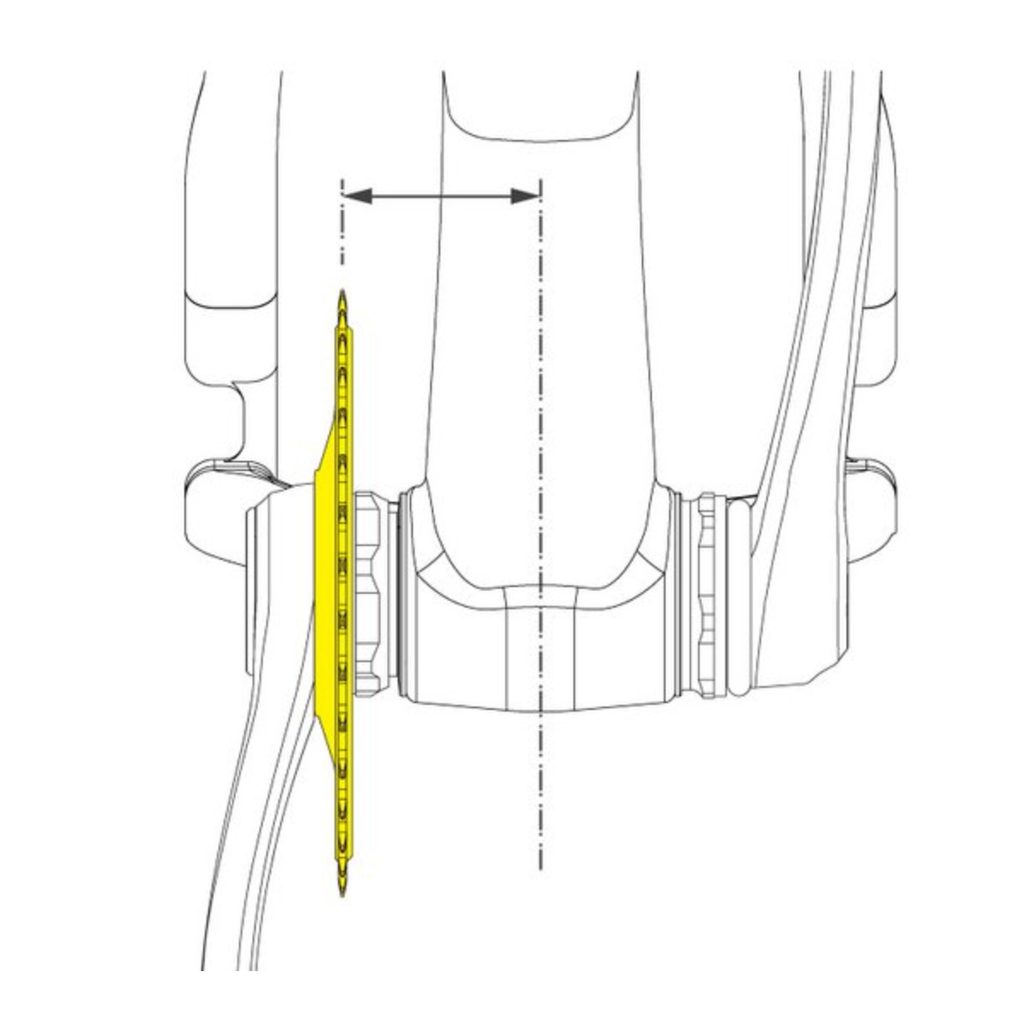
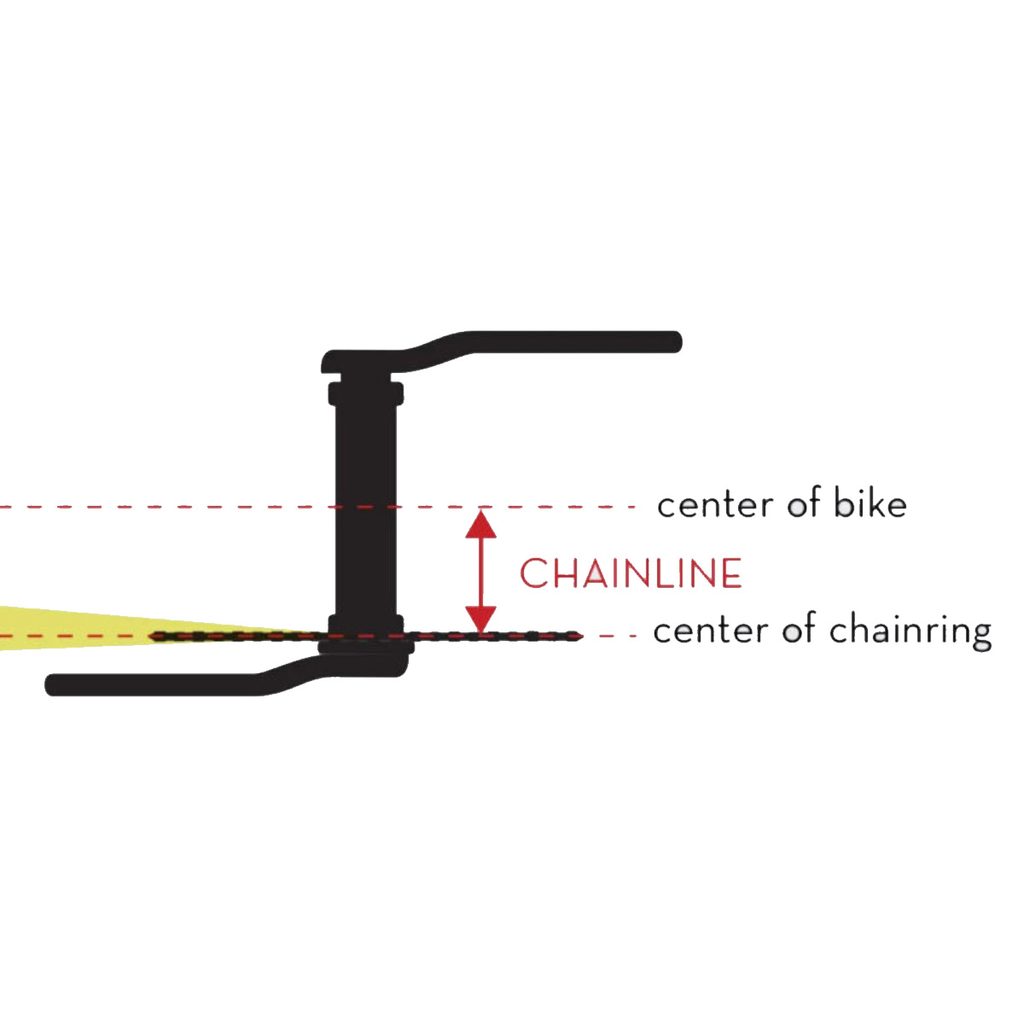
- The correct chainline is essential for proper shifting performance and drivetrain longevity.
- Chainline is mostly determined by rear axle spacing, but modern drivetrains are increasingly being designed around wider chainlines. The main reason for this is to provide more clearance to fit wider tyres
Offset is a function of the chainring. It is defined as the distance from where the chainring mounts to the chainring teeth. Offset is used in chainrings to achieve the correct chainline for the bike or drivetrain.
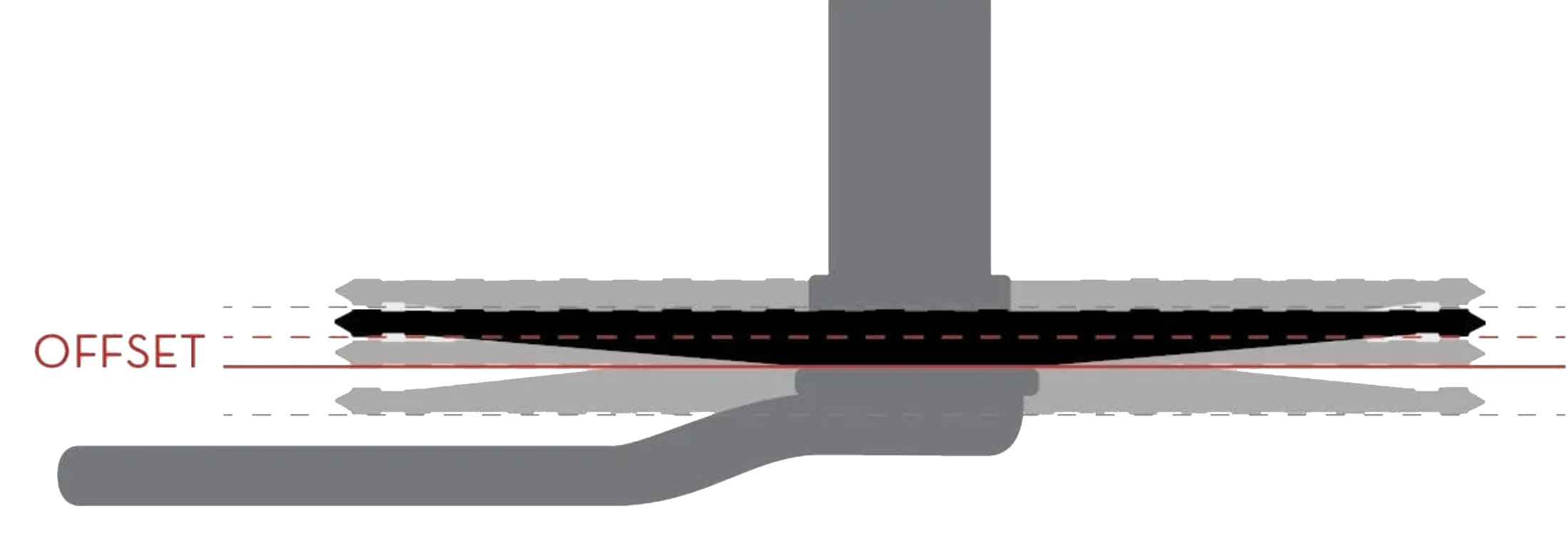
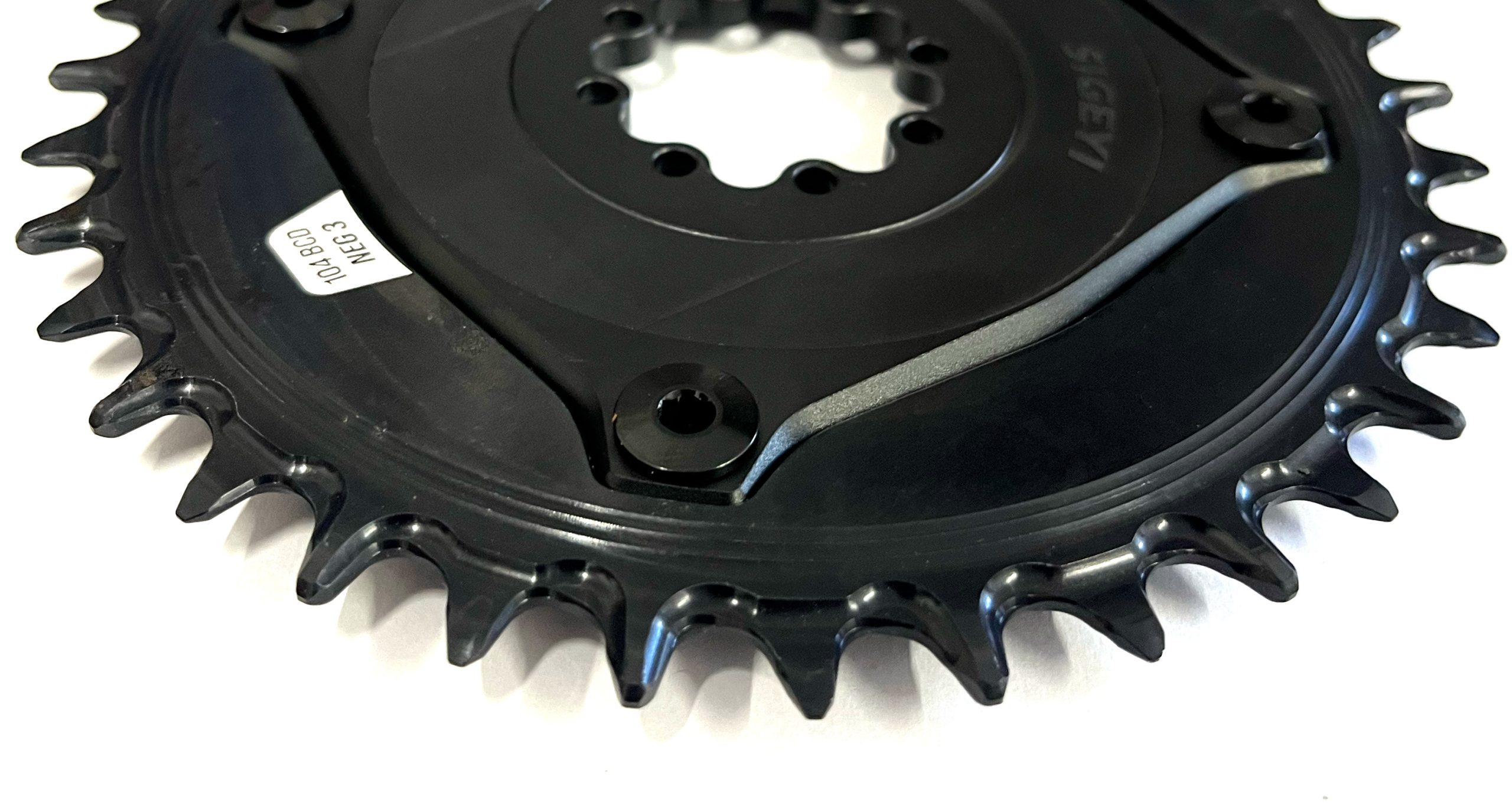
- The Power Meter already has an offset built in. For 104 bcd MTB Power Meters this offset is 3mm
- This means a standard 104 bcd chainring, which has a 0mm offset, mounted on a Sigeyi power meter will have the same chainline as a Direct Mount chainring with 3mm offset. This will be the standard solution for most applications
- If you need to achieve the wider chainline, there is also the option of the Negative 3mm offset chainring. This chainring essentially cancels out the offset in the power meter, returning it to 0mm offset
- Example: SRAM DUB crank (short spindle) on Transmission drivetrain needs Negative 3mm chainring. SRAM DUB WIDE crank (longer spindle) on Transmission drivetrain needs standard 0mm chainring.
- Example 2: Shimano 8200 or 9200 cranks need Negative 3mm chainring
Look at the Direct Mount chainring that came off the bike. The offset should be marked on the chainring. Use this to determine which chainring you need
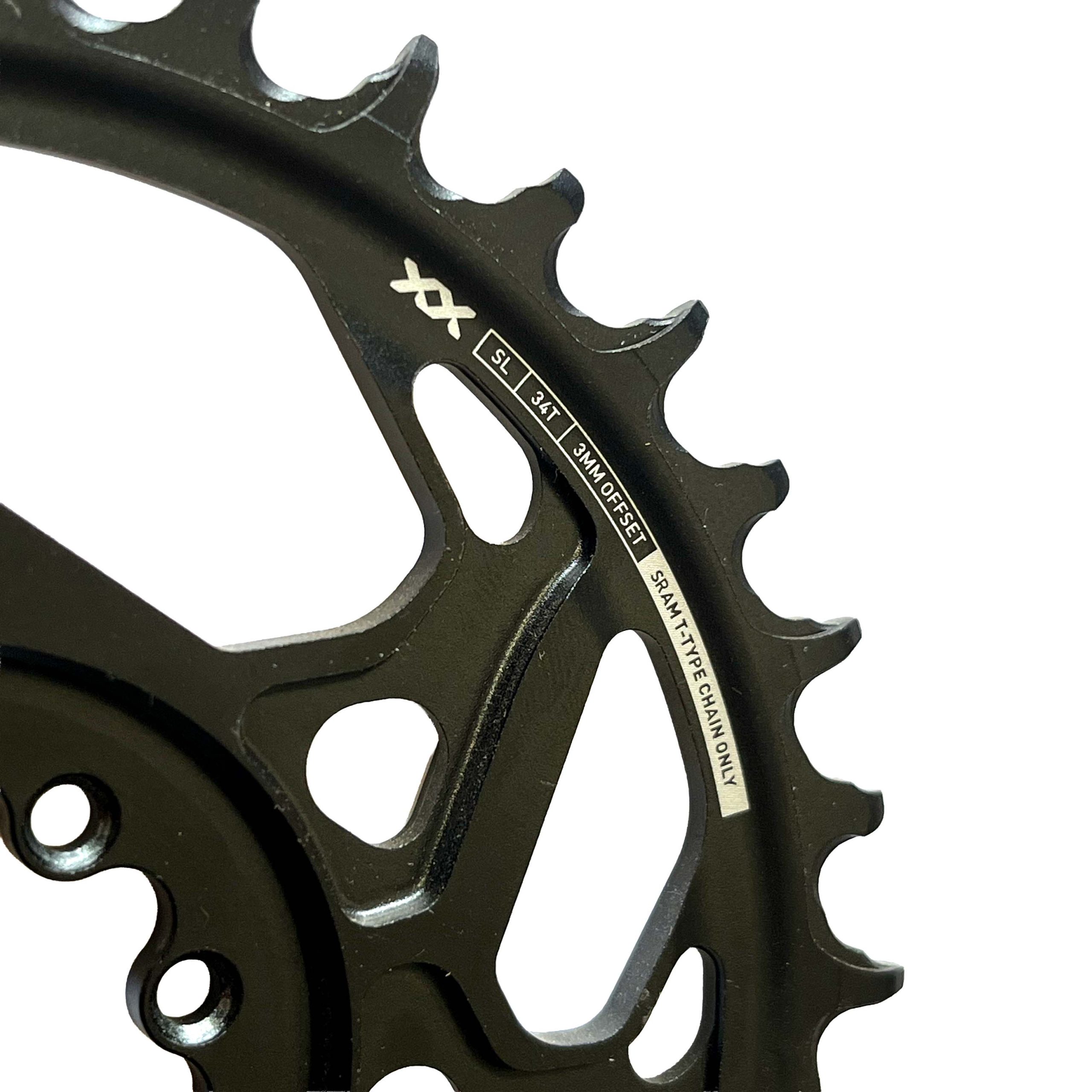
If you are still unsure, contact us and we will help you figure out what you need